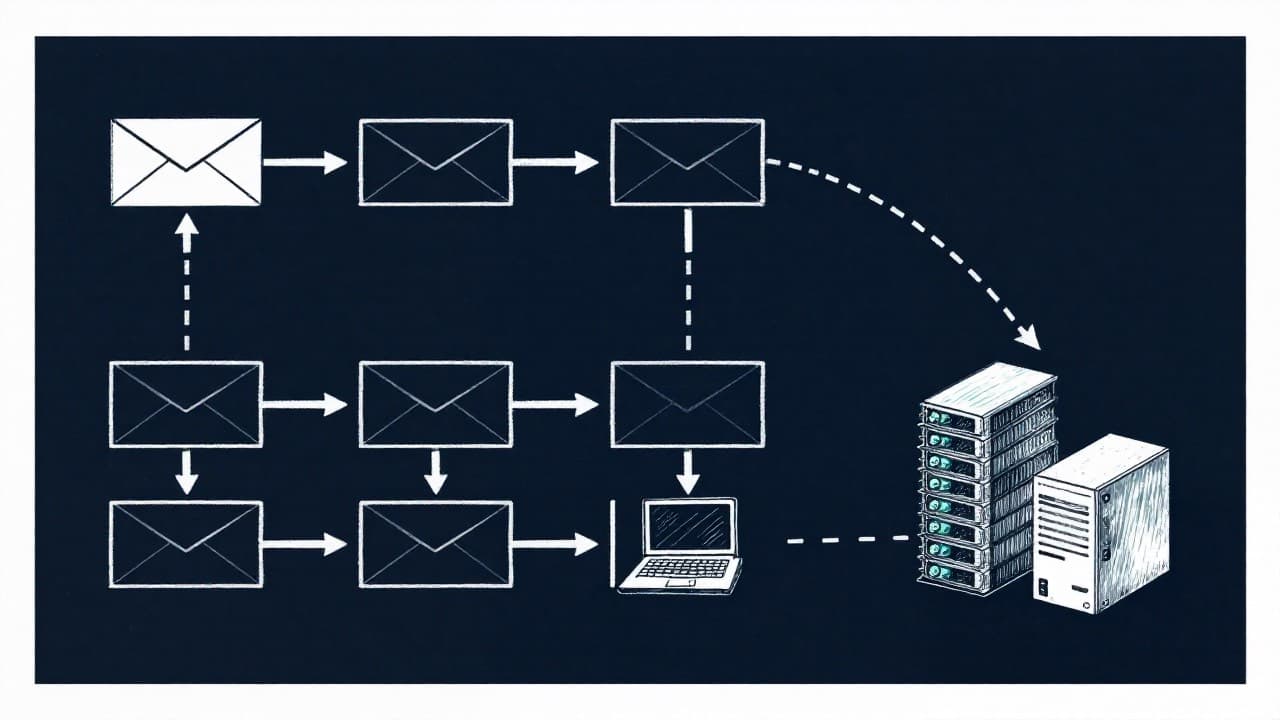
Threat actors have been observed using the ROMULUS ClickFix malware delivery platform to distribute a previously undocumented remote access trojan called CNCMachineRMS that shares code similarities with earlier implants.
Blackpoint Cyber researchers Sam Decker, Nevan Beal, and Andi Ursry reported that ROMULUS functions as a delivery service, pushing CNCMachineRMS and LegionLoader through separate infection chains while retaining ClickFix lures and signed binary sideloading techniques.
One observed chain begins with a malicious MSI installer named IconEdit2Turb.msi executed via msiexec.exe from a PowerShell command. The installer masquerades as the Stardock Smart DeElevation Tool and triggers DLL sideloading of I++u.dll, which decodes and executes embedded shellcode that launches CNCMachineRMS.
The same CNCMachineRMS implant has also been delivered through BabaDeda Loader campaigns that abuse the legitimately signed IBM SPSS IDE executable for DLL sideloading.
CNCMachineRMS provides remote desktop control, screen streaming, microphone and camera capture, file management, system reconnaissance, and the ability to run additional payloads on demand, with all attacker communication occurring over DNS over HTTPS.
Broader ClickFix Campaign Landscape
Multiple concurrent operations tracked by Blackpoint Cyber, Forescout Research, and Huntress demonstrate the expanding scope of ClickFix activity:
- ClickFix combined with EtherHiding on more than 70,000 compromised sites that fetch JavaScript from a Polygon smart contract.
- Fake Zillow apartment-review pages delivering NetSupport RAT.
- The TRUST#GRAFT JavaScript-to-WordPress injection chain that plants the malicious Web Media Optimizer plugin.
- Google Ads for “amazon business” leading to Lumma Stealer and NetSupport deployment.
- Google Ads for “claude mac” that redirect Mac users to pages deploying Atomic macOS Stealer (AMOS) via TerminalFix and InstallFix variants.
- Typosquatted domains serving fake Cloudflare prompts that ultimately drop the previously unreported CrocoRat trojan.
Huntress researchers highlighted that ClickFix has matured beyond simple loaders into sophisticated attack chains supporting persistence, lateral movement, reconnaissance, and credential theft, sometimes using steganographic reconstruction of executables from data hidden inside PNG files.